The Strategic Imperative of Recognition of Prior Learning: Driving Institutional Retention, Revenue, and Academic Equity
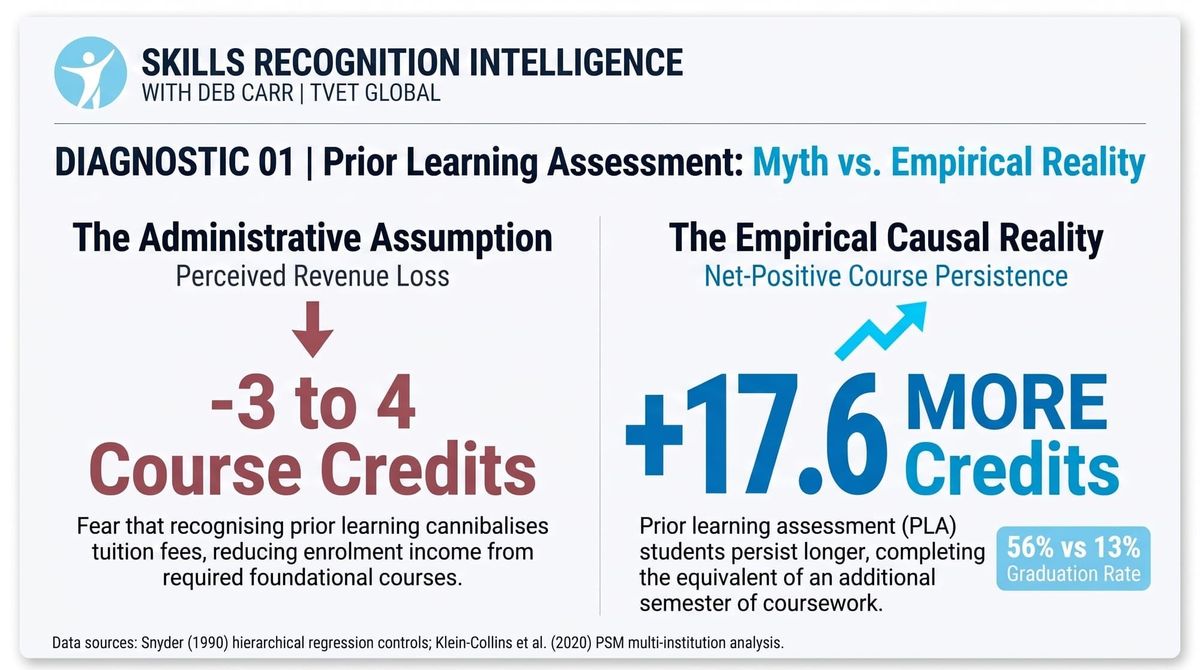
Navigating the Universities Accord and demographic contraction, institutions must look beyond tuition-loss myths. Empirical evidence shows RPL exerts an independent causal boost on adult persistence, accelerating completions while delivering net-positive institutional revenue.
Introduction
As higher education institutions face tightening operating margins, shifting student demand, and the structural inability of traditional school-leaver pipelines to meet enrolment targets, university executives are compelled to reimagine recruitment and retention strategies (Australian Universities Accord Panel, 2024). Non-traditional adult learners, individuals balancing employment, family, and existing workforce capabilities, represent the single most critical cohort for institutional sustainability and national skills targets (Arcomano Britton, 2020; Australian Universities Accord Panel, 2024; Council for Adult and Experiential Learning (CAEL) et al., 2018; Klein-Collins, 2010; Klein-Collins et al., 2020).
Despite its recognised potential, the Recognition of Prior Learning (RPL), also termed Prior Learning Assessment (PLA) or Credit for Prior Learning (CPL), is frequently under-promoted or relegated to a niche administrative process (Brigham & Klein-Collins, 2010, cited in Arcomano, 2020). A primary barrier to widespread institutional adoption has been the persistent scepticism from academic leaders regarding methodological rigour, self-selection bias in existing studies, and a widespread fear that awarding prior learning credit forfeits crucial tuition revenue (Klein-Collins et al.).
This article synthesises empirical evidence demonstrating that embedding RPL as a core strategic enrolment management tool delivers profound institutional benefits: it overcomes selection bias, generates net-positive tuition revenue through heightened persistence, accelerates degree completion, and establishes a strong competitive advantage in adult student recruitment.